Sketchbook · 2 min read
Drawing an everyday object
A small outline sketch is a useful way to spend more time looking.

Choose a manageable subject
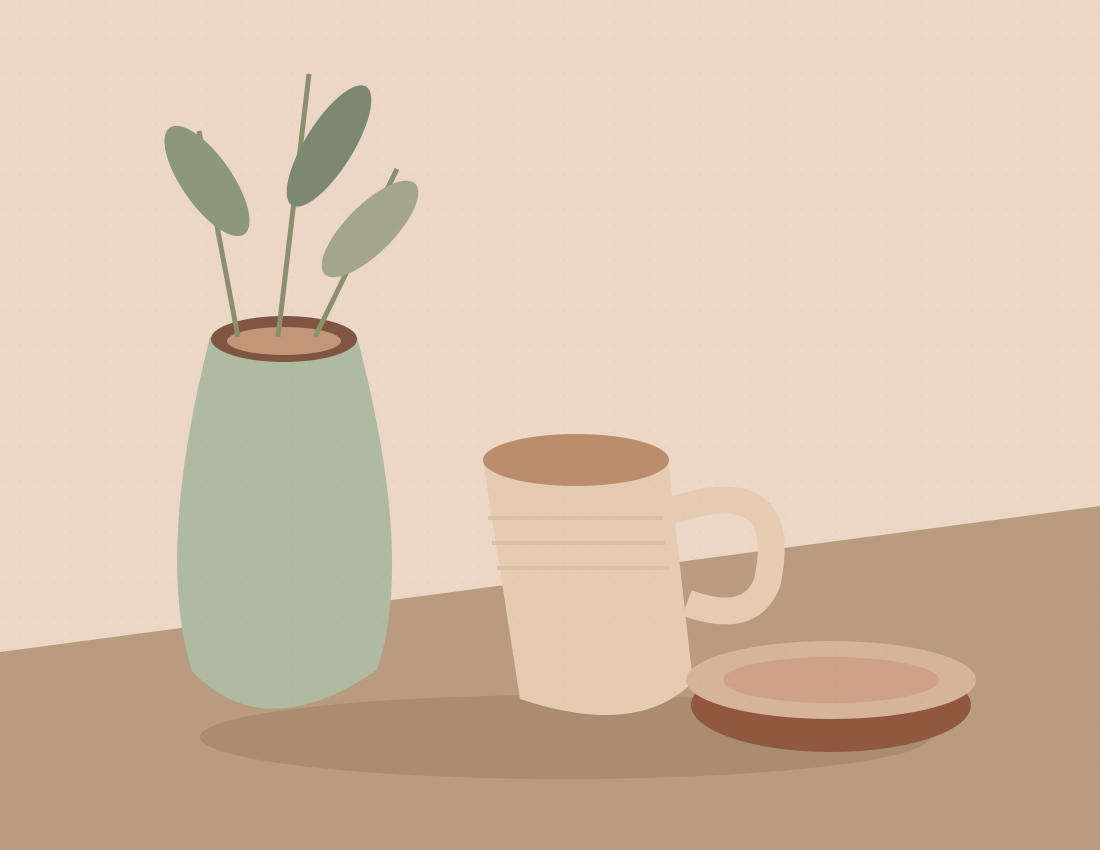
Pick one object already nearby and put it on a clear stable surface. A cup, bowl or vase provides a simple beginning. Choose an angle you can keep for a few minutes. Start with the largest outline rather than the marks and reflections that may change with every small movement.
Mark a few relationships
Compare the width to the height and the size of the opening to the body. Use light lines and correct them when the relationship feels wrong. The aim is to understand the form through observation. A rough sketch with accurate attention can be more useful than a polished drawing made from expectation.
Add a note about use
Write how the object appears in your ordinary day: the cup by the kettle, the bowl holding keys or the vase on a shelf. This sentence gives the sketch a context. Keep the date so that another drawing can become a comparison. Familiar objects offer plenty of material without needing a new collection.
Written for the Clay Table Notes editorial collection. Read at your own pace.